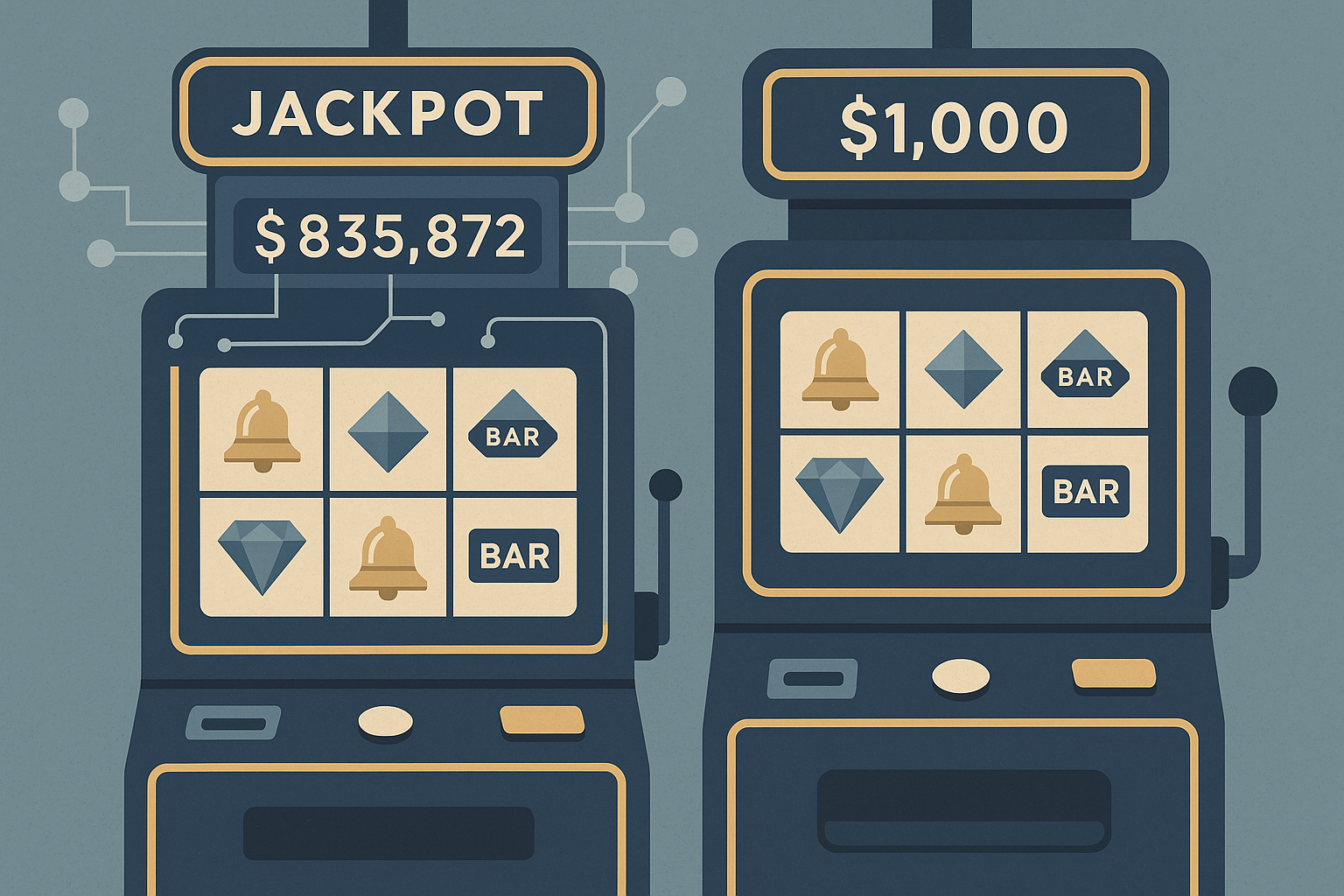

Online slot providers are the studios that design, build, and license slot games; the casino you log into is the shop that stocks them. That split matters more than most players realize. The provider decides the RTP range, the volatility, the bonus mechanic, the art style, and the sound design. The casino mostly decides which of those games appear in the lobby and how they’re arranged.
Once you start noticing which studio made what, patterns emerge fast. You learn that one developer’s games tend to pay in small frequent hits, another’s sit dead for 200 spins before a feature does anything, and a third reuses the same bonus structure across a dozen titles. Here’s how the studio system works and what it means for the games in front of you.
Game studios vs casino operators: understanding the difference
A slot studio (also called a game developer, slot software provider, or supplier) creates games. A casino operator runs the site or app, holds the gambling license in your state, takes your deposit, and pays your withdrawal. The two are separate businesses in a B2B relationship: the studio licenses its games to the operator, usually for a share of the revenue those games generate.
The Netflix comparison is the cleanest one. Netflix doesn’t make most of what you watch, it licenses it, arranges it into rows, and decides what gets promoted on the home screen. Warner Bros. or A24 made the actual film, and their fingerprints are all over its look and pacing. Swap in a casino lobby and a slot studio and the relationship is nearly identical.
A few practical consequences of that arrangement:
- The same game plays identically at every licensed casino that carries it. Sweet Bonanza at Casino A is the same math as Sweet Bonanza at Casino B, because the studio runs the game logic on its own servers.
- Casinos can’t tighten a slot on a whim. What they can sometimes do is choose between the RTP versions a studio ships (more on that below).
- Game libraries differ by state and by operator, because licensing deals and regulatory approvals are negotiated separately in each jurisdiction. A studio needs approval in New Jersey, Michigan, Pennsylvania, and so on, one market at a time.
- Some operators own studios. Evolution, for example, owns NetEnt, Red Tiger, Big Time Gaming, and Nolimit City, while also supplying live dealer games. The lines aren’t always tidy.
If you want the plumbing behind all this, our guide to iGaming software and platforms covers how game aggregators, platform providers, and operators connect.
Major online slot providers and their signatures
There are hundreds of studios. A dozen or so account for most of what you’ll actually see in a US regulated lobby. Each has a recognizable house style.
NetEnt: innovation and visual polish
NetEnt, founded in Sweden in 1996 and now part of Evolution, built its reputation on clean production values and games that feel good to spin. Starburst and Gonzo’s Quest are the two that defined the modern online slot look, and Gonzo’s Quest popularized the Avalanche mechanic where symbols drop in and cascade with a rising multiplier. NetEnt titles usually sit in the low-to-medium volatility band with straightforward feature sets, which makes them a reasonable starting point for newer players.
Microgaming: volume and progressive jackpots
Microgaming was one of the earliest online casino software companies and released an enormous catalogue over two decades, including the Mega Moolah progressive jackpot network. In 2022 the games business transitioned to Games Global, which now distributes and develops that library. The signature here is scale plus networked progressives: a slice of every bet across many casinos feeds a shared jackpot pool, which is why the top prize can grow into the millions while the base game RTP runs lower than a non-jackpot slot.
Pragmatic Play: high volatility and bonus features
Pragmatic Play is the studio behind Sweet Bonanza, Gates of Olympus, and the Big Bass series, and it has become the default answer to “which games are people playing right now.” The house style is high volatility, tumbling reels, and multiplier symbols that collect during free spins, plus a bonus buy option in many markets where regulators permit it. Sessions on these games tend to be swingy by design: long quiet stretches punctuated by feature rounds that carry almost all of the game’s return.
The rest of the roster at a glance
Four more studios you’ll run into constantly, and what distinguishes each:
| Studio | Known for | Signature mechanic | Typical volatility |
|---|---|---|---|
| Play’n GO | Book of Dead and the Rich Wilde adventure series | Expanding symbol free spins | Medium to high |
| Big Time Gaming | Bonanza; inventor of Megaways | Megaways (up to 117,649 ways to win) | High |
| Red Tiger (Evolution) | Bright, fast, mobile-first slots | Daily Drop time-limited jackpots | Medium to high |
| Nolimit City (Evolution) | Dark themes, extreme math models | xWays, xNudge, xSplit symbols | Very high |
| IGT | Land-based crossovers and licensed brands | Wheel bonus rounds (Wheel of Fortune) | Low to medium |
| Light & Wonder | Casino-floor classics brought online | Hold-and-spin and lock-in features | Medium |
Two of those deserve a note for US players specifically. IGT and Light & Wonder come from the physical casino world, so their online catalogues are full of titles you’ve already played in Vegas or at a regional property. If you like the rhythm of a real cabinet game, those are the studios to filter for.
How providers shape game mathematics and features
Yes, the provider affects RTP and volatility, because the provider writes the math. Every reel strip, symbol weight, and feature trigger frequency is set during development and then verified by an independent testing lab before the game goes live in a regulated market.
RTP and volatility differences
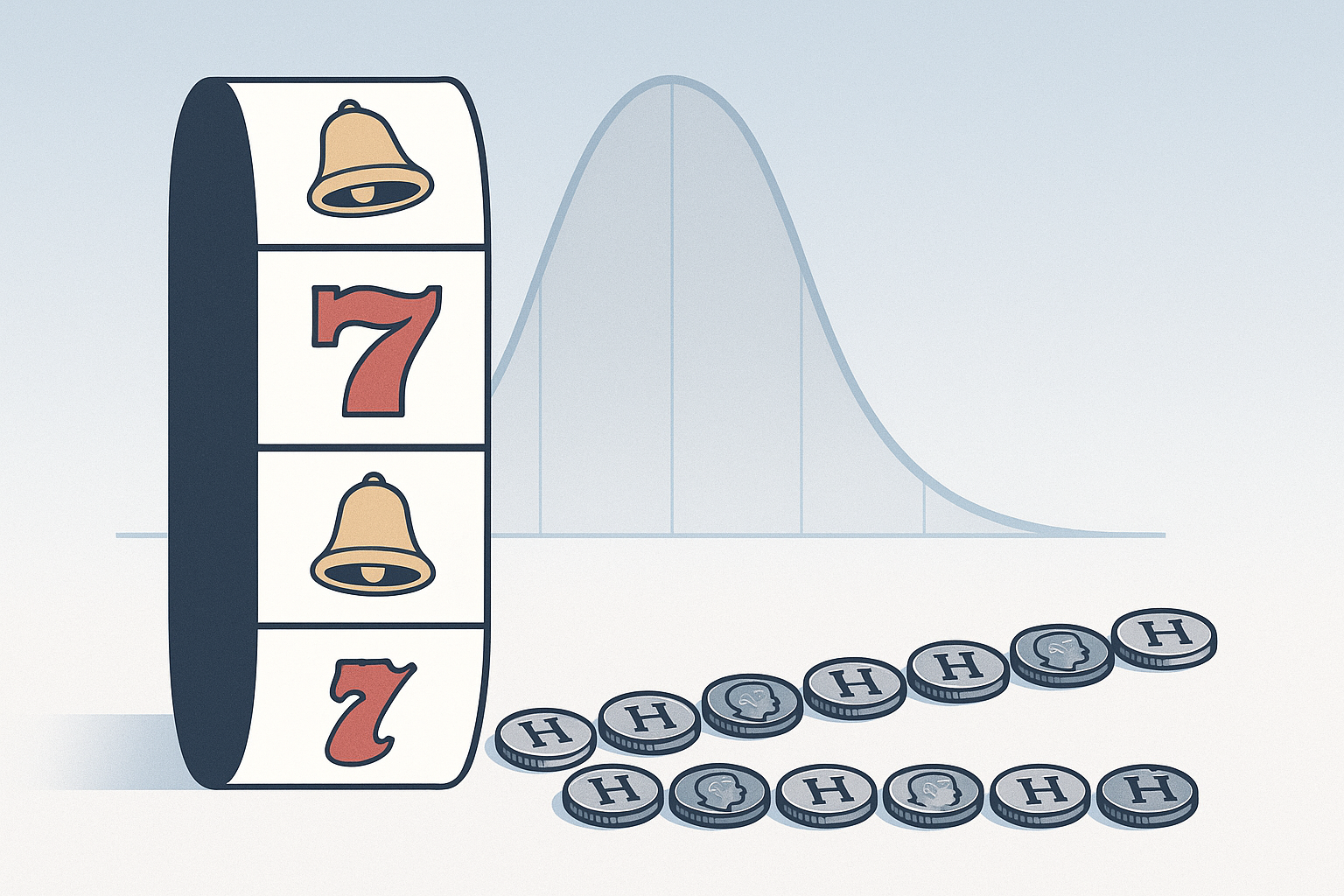
RTP is the share of all wagers a game returns over the long run, measured across millions of rounds. Most online slots land somewhere around 94% to 97%. A 96% RTP means a 4% house edge: for every $100 wagered across the game’s entire lifetime, roughly $96 comes back to players collectively. It says nothing about your next 50 spins, and it isn’t a promise to anyone individually.
Volatility is separate. It describes how that return is distributed, not how much of it there is. A low volatility slot pays small amounts often; a high volatility slot pays rarely and larger. Two games can both run 96% RTP and feel nothing alike.
Three studio-level habits worth knowing:
- Studios often ship multiple RTP versions of the same game. A title might be available at 96.5%, 95%, and 94%, and the operator picks which version to deploy. This is legal and disclosed, but it’s why the number in the paytable is the only one that counts. Always open the info screen at the casino you’re actually playing at.
- Jackpot games carry lower base RTP. Part of every bet is diverted into the progressive pool, so the return you experience outside a jackpot win is thinner. Mega Moolah style networks are the clearest example.
- Volatility is a house style. Nolimit City and Pragmatic Play build deliberately punishing variance. NetEnt and IGT tend toward gentler distributions. Neither approach changes the underlying fact that the house edge is built in and results are governed by an RNG, so every spin is independent of the last.
Games in regulated US markets are tested by independent labs such as Gaming Laboratories International before approval, which is how the advertised math gets verified.
Signature bonus mechanics by studio
Studios protect their inventions, and some license them out. Big Time Gaming’s Megaways is the obvious case: BTG created the variable-reel mechanic that generates up to 117,649 ways to win, then licensed it to dozens of other developers, which is why you see Megaways versions of games from studios that had nothing to do with inventing it.
Other recognizable mechanics: Gonzo’s Quest introduced cascading Avalanche reels with an increasing multiplier. Pragmatic Play leans on tumble mechanics with multiplier orbs collected during free spins. Nolimit City stacks its xWays and xNudge modifiers to create games where a single spin can restructure the entire grid. Red Tiger built jackpots that must drop within a time window rather than growing indefinitely. Land-based studios brought the hold-and-spin format online, where cash symbols lock in place across respins.
Once you can name the mechanic, you can predict the shape of a session before you spin. That’s the practical payoff of paying attention to providers.
Theme specializations and licensed content
Original vs licensed themes
Original themes are cheaper to make and fully owned by the studio, so sequels and reskins are easy. Licensed content means paying a rights holder for a film, band, TV show, or board game, which raises the cost and usually the marketing budget behind the release.
NetEnt built a run of music-licensed slots including Guns N’ Roses, Jimi Hendrix, and Motörhead. Microgaming’s catalogue included big entertainment licenses such as Game of Thrones and Jurassic Park. IGT’s Wheel of Fortune is arguably the most recognizable licensed slot brand in the US, on the floor and online. Licensed themes give you familiar audio and imagery, but the license doesn’t improve the math. Some licensed slots run below average RTP precisely because the rights fee has to be paid out of the game’s margin.
Studio theme specializations
Studios repeat what works, and their catalogues cluster around themes:
- Play’n GO owns Egyptian and pulp-adventure territory through Rich Wilde and Book of Dead, plus a steady line of horror and mythology titles.
- Pragmatic Play splits between candy and fruit themes (Sweet Bonanza), Greek mythology (Gates of Olympus), and fishing (Big Bass).
- Nolimit City goes deliberately grim: prisons, asylums, mining disasters, executions. Not for everyone, and that’s the point.
- Red Tiger favors bright Asian-inspired and mystic themes with fast, mobile-friendly presentation.
- IGT and Light & Wonder recycle proven floor themes: Zeus, Cleopatra, Rainbow Riches, 88 Fortunes.
Identifying the studio behind your favorite slots
Finding out who made a slot takes about ten seconds once you know where to look.
- Check the loading screen. Almost every slot flashes the studio logo while it loads, and many display it permanently in a corner of the game frame.
- Open the info or paytable menu. The rules screen names the provider and, more importantly, lists the RTP and volatility rating for the version you’re playing.
- Use the lobby filter. Most casino apps have a “Providers” or “Studios” filter, sometimes tucked behind a “Filter” or “All Games” button. Filtering by studio is the fastest way to find more games with the same feel.
- Look at the game tile. Some lobbies print the provider name under the thumbnail or use branded row headers like “Pragmatic Picks.”
- Search a slot database. Independent catalogues list developer, release date, RTP versions, and max win for tens of thousands of titles.
You can also learn to spot signatures without any of that. Studios reuse sound libraries, symbol shapes, and UI layouts across their catalogues. NetEnt’s chimes and Pragmatic’s win-celebration jingles are distinctive enough that regular players recognize them instantly. Nolimit City’s grid, with its odd reel heights and split symbols, is unmistakable after a few sessions.
FAQ
Who are the biggest online slot providers?
By catalogue size and casino presence, the most widely distributed studios include Pragmatic Play, Play’n GO, NetEnt, Games Global (the former Microgaming library), Red Tiger, Big Time Gaming, IGT, and Light & Wonder. Availability varies by state, since each studio needs approval in each regulated market.
How do slot studios differ from casino operators?
Studios build and license the games. Operators hold the gambling license, run the site, and handle your money. The studio sets the math and features; the operator decides which games to stock.
What features do different providers specialize in?
Big Time Gaming created Megaways. NetEnt popularized cascading Avalanche reels. Pragmatic Play leans on tumbling symbols with collected multipliers. Nolimit City builds grid-altering xWays and xNudge modifiers. Red Tiger runs time-limited Daily Drop jackpots. Land-based studios bring hold-and-spin formats online.
Does the provider affect RTP or volatility?
Yes. The studio designs both. Many studios also release several RTP versions of a game and let the operator choose, so check the paytable at the specific casino you’re playing rather than relying on a figure from a review.
How can I tell which studio made a slot?
Look at the loading screen logo, open the game’s info or paytable menu, or use the provider filter in the casino lobby. Independent slot databases also list the developer for almost every released title.
Understanding providers makes you a better-informed player, not a winning one. Every slot carries a mathematical house edge, outcomes are produced by an RNG and are independent of previous spins, and no amount of studio knowledge changes that. Set a deposit limit before you play, treat the money as entertainment spend, and if it stops feeling like entertainment, use the site’s cool-off or self-exclusion tools. In the US, the National Council on Problem Gambling runs a confidential 24/7 helpline at 1-800-GAMBLER. Must be 21+ (18+ in some states) to gamble online.