What are paylines in slots?
Slot paylines are the predetermined patterns across the reels that matching symbols have to land on for a win to pay. If the game says “25 paylines,” there are 25 fixed shapes drawn across the reel grid, and only symbols sitting on one of those shapes count together. Land three matching symbols on the grid but off the pattern, and nothing pays.
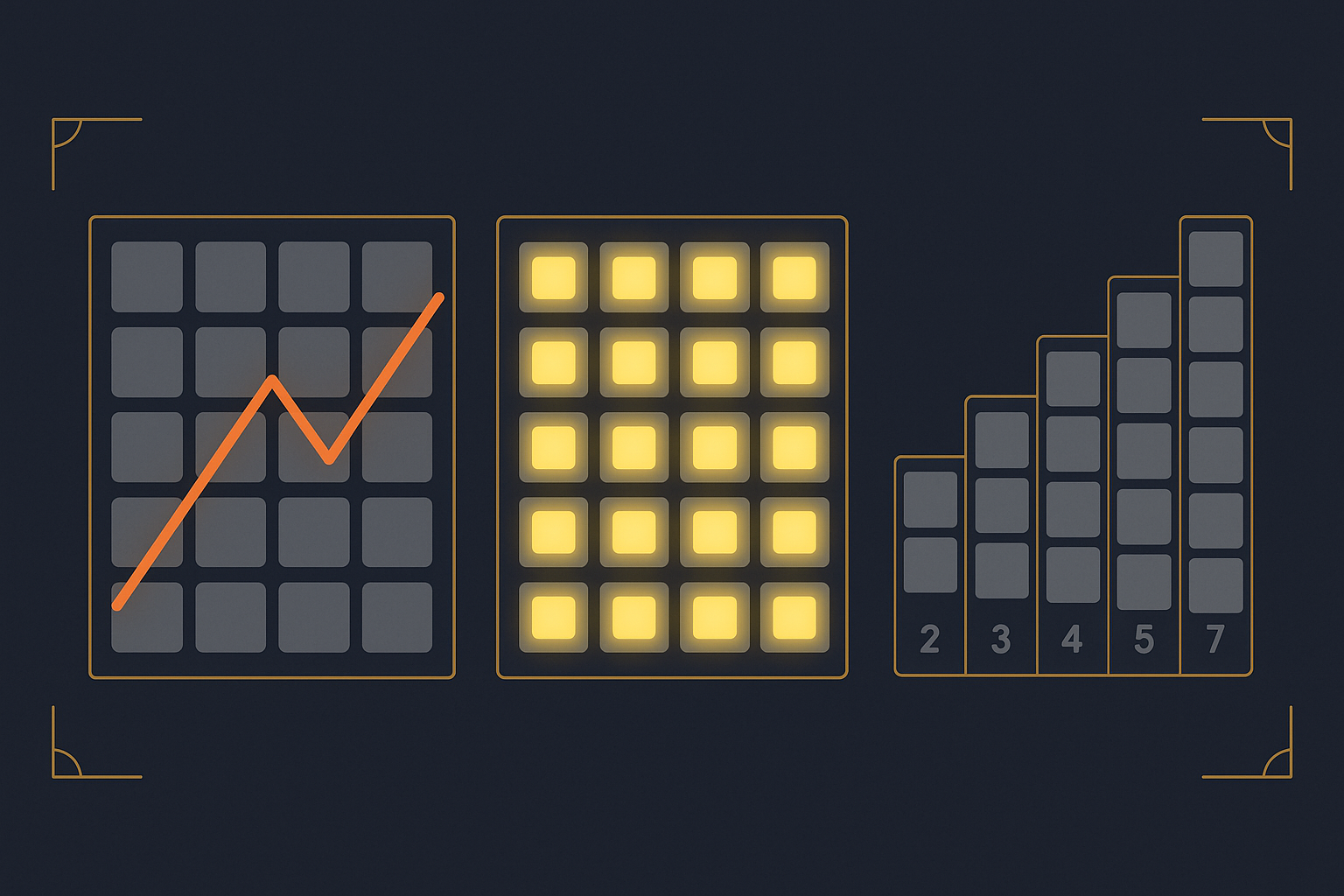
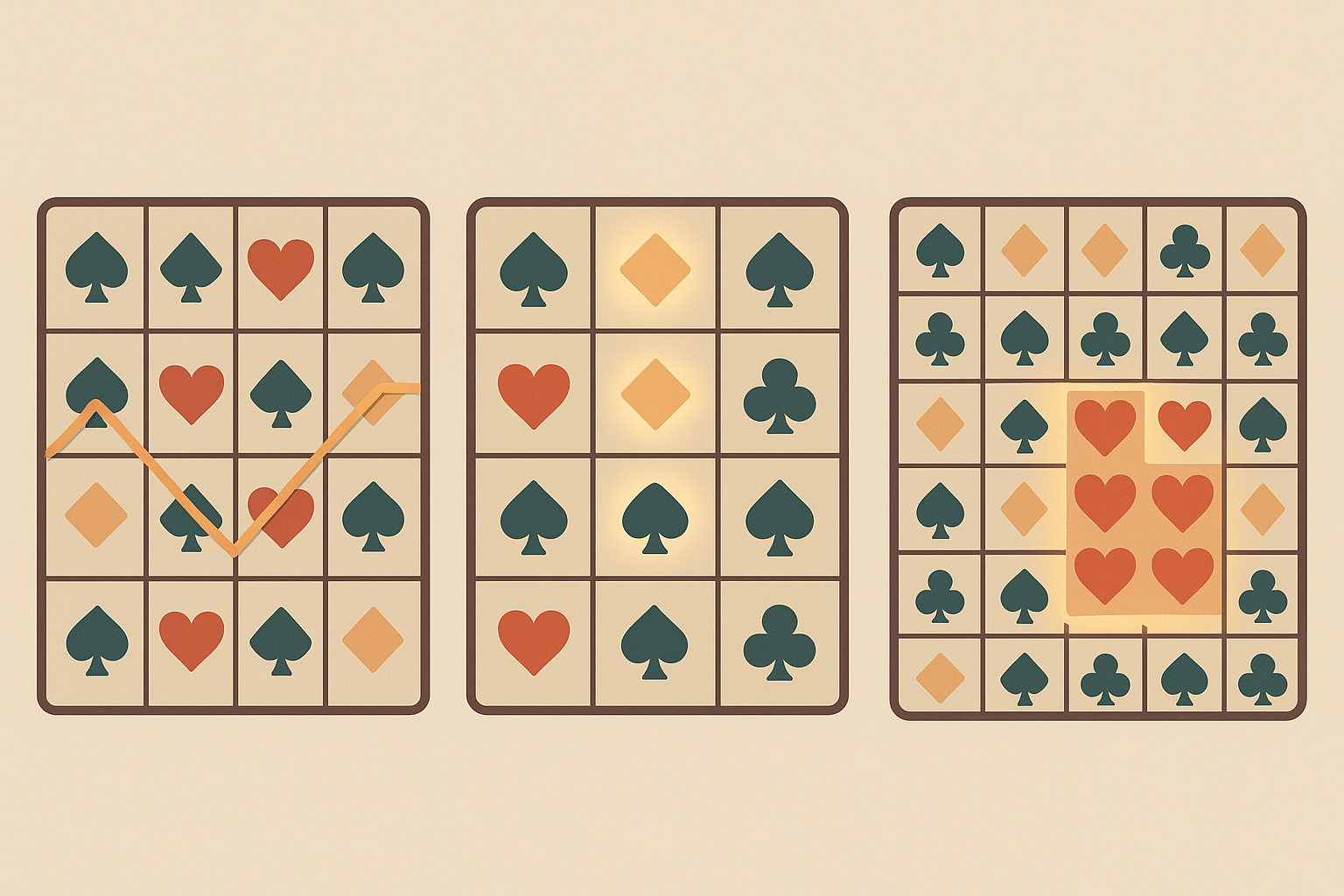
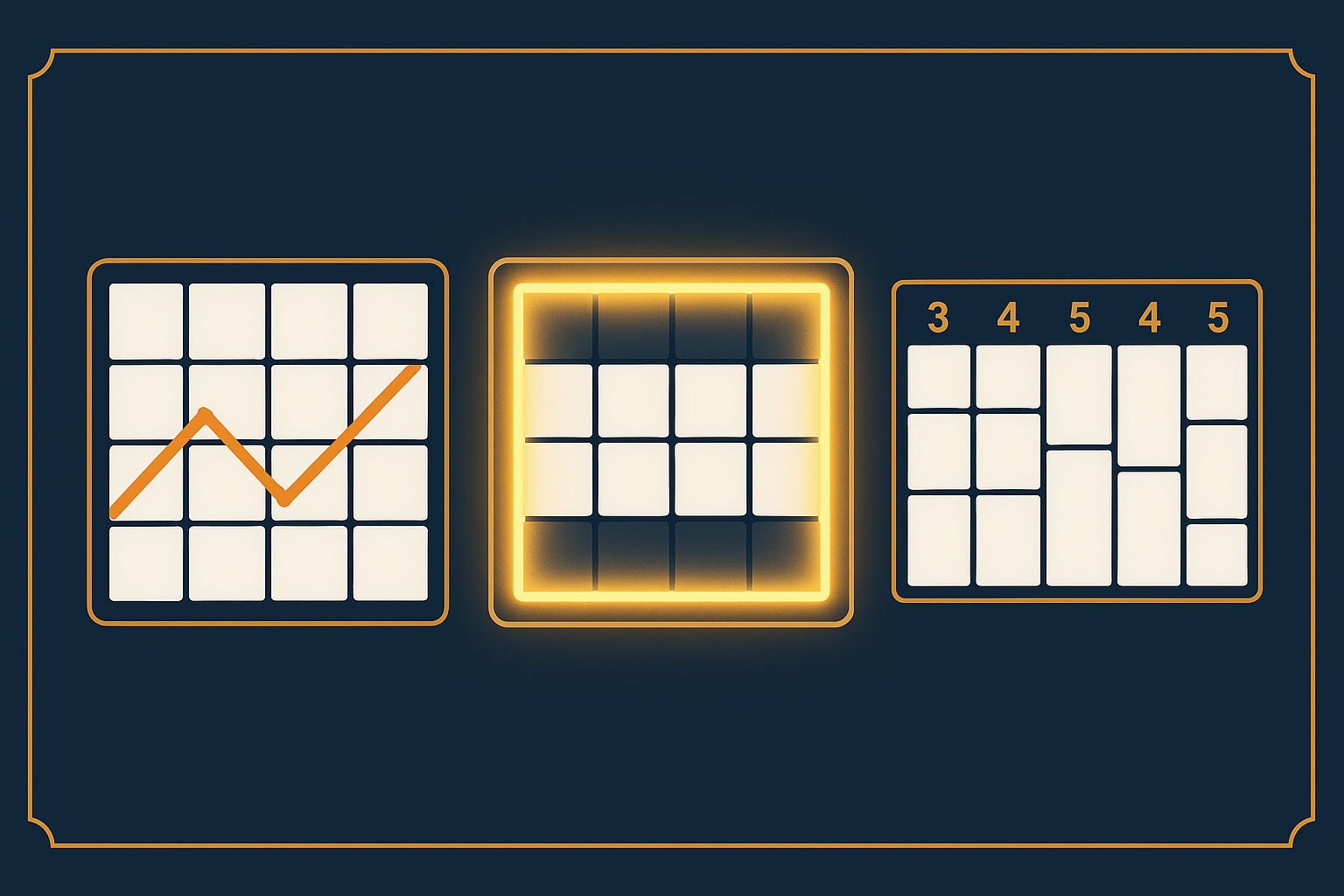
The simplest example on a standard 5-reel, 3-row grid is a straight line through the middle row: reel 1 middle, reel 2 middle, reel 3 middle, and so on. Payline number two and three are usually the top row and bottom row. After that, designers start bending them:
- V-shape: top row, middle, bottom, middle, top, reading left to right across the five reels.
- Zigzag: top, bottom, top, bottom, top, which crosses the grid four times and looks nothing like a line.
Almost all payline slots pay left to right, starting from reel 1. A few pay both ways, so a combination that starts on reel 5 also counts. NetEnt’s Starburst is the best known example of a both-ways game. Scatter symbols are the exception to all of this: they pay or trigger features from anywhere on the screen, ignoring paylines entirely.
Fixed vs adjustable paylines
With fixed paylines, every line is always active and you cannot switch any off. Your only bet control is the stake per line or a single total stake figure. Most modern slots work this way, because it keeps the math and the interface simple.
With adjustable paylines, common on older three-reel and early video slots, you choose how many lines to activate. Playing 5 of 25 lines cuts your total bet to a fifth, but it also cuts your coverage by the same proportion. You are not getting a discount on the same game; you are playing a smaller version of it.
One thing worth checking in the paytable: some older games only qualify for the top fixed jackpot or a bonus feature when all lines (or max bet) are active. In those games, playing fewer lines genuinely does lower your effective return, because you are paying into a prize you can’t win.
How paylines affect your bet size
On a payline slot, the arithmetic is simple:
Total bet = number of active paylines × bet per line
So 25 lines at $0.10 per line is a $2.50 spin. Payouts follow the same logic in reverse: paytable values are usually quoted per line bet, not per total bet. If five matching symbols pay 100× and your line bet is $0.10, that line wins $10, not $250. This is why a “1,000× win” screenshot on a low line bet can be a modest dollar amount, and why comparing win multipliers between a payline slot and a single-stake slot is misleading unless you know which base the multiplier applies to.
Ways-to-win: beyond traditional paylines
Ways-to-win systems drop the fixed patterns. Instead, any matching symbols on consecutive reels pay, no matter which row they land in, as long as the run starts on reel 1. That’s why you’ll see games advertised as “243 ways” or “1,024 ways” instead of a payline count.
The practical difference for you: there is no bet-per-line control. You set one total stake (often through a coin value and a bet level), and every way is always active.
How 243 ways to win works
The 243 figure isn’t marketing. It’s 3 symbol positions per reel raised to the power of 5 reels: 3 × 3 × 3 × 3 × 3 = 243. Every possible route from left to right across a 5-reel, 3-row grid is counted as a way to win, so a symbol sitting on any row of reel 1, any row of reel 2, and any row of reel 3 pays a three-of-a-kind. Microgaming’s Thunderstruck II is a well known 243-ways game.
Compare that with a 25-payline version of the same grid: the grid is identical, but only 25 of the 243 possible routes are live. That sounds dramatically worse until you look at the paytable, where the symbol values are much higher to compensate. Which brings us to the point most players miss, covered further down.
1,024 ways and higher configurations
Add a fourth row and the count jumps: 45 = 1,024 ways. Six rows on five reels gives 65 = 7,776. The pattern is always (symbols per reel)(number of reels), assuming every reel shows the same number of symbols. Bigger numbers mean more frequent low-value hits and, almost always, a paytable trimmed down to match. The headline number tells you about the reel structure, not about generosity.
Megaways explained: variable ways per spin
Megaways, a mechanic licensed from Big Time Gaming, takes the ways-to-win idea and makes the reel heights random on every spin. Each of the six reels can land showing anywhere from 2 to 7 symbols, so the number of ways changes spin to spin instead of staying constant.
The Megaways math
The maximum works out to 7 × 7 × 7 × 7 × 7 × 7 = 117,649 ways, which is where the famous number comes from. The minimum is 26 = 64 ways. Most spins land somewhere in between, and it’s a simple multiplication of whatever heights you got:
| Reel heights that spin | Calculation | Ways to win |
|---|---|---|
| 2-2-2-2-2-2 | 26 | 64 |
| 4-4-4-4-4-4 | 46 | 4,096 |
| 5-3-6-4-7-2 | 5×3×6×4×7×2 | 5,040 |
| 7-7-7-7-7-7 | 76 | 117,649 |
Bonanza Megaways, the original, adds a horizontal reel above the middle reels that drops extra symbols in, which is how it reaches the full count. Your stake does not change when the ways count changes, and that’s the part people find counterintuitive: a 64-way spin costs the same as a 117,649-way spin. The game’s long-run return already accounts for the distribution of reel heights.
Cascading reels and multipliers
Nearly every Megaways game pairs the variable reels with cascading (tumbling) reels: winning symbols are removed, new ones drop into the gaps, and any fresh combination pays again from the same stake. Chains of two or three tumbles are common; long chains are rare and are where the big multipliers on these games come from.
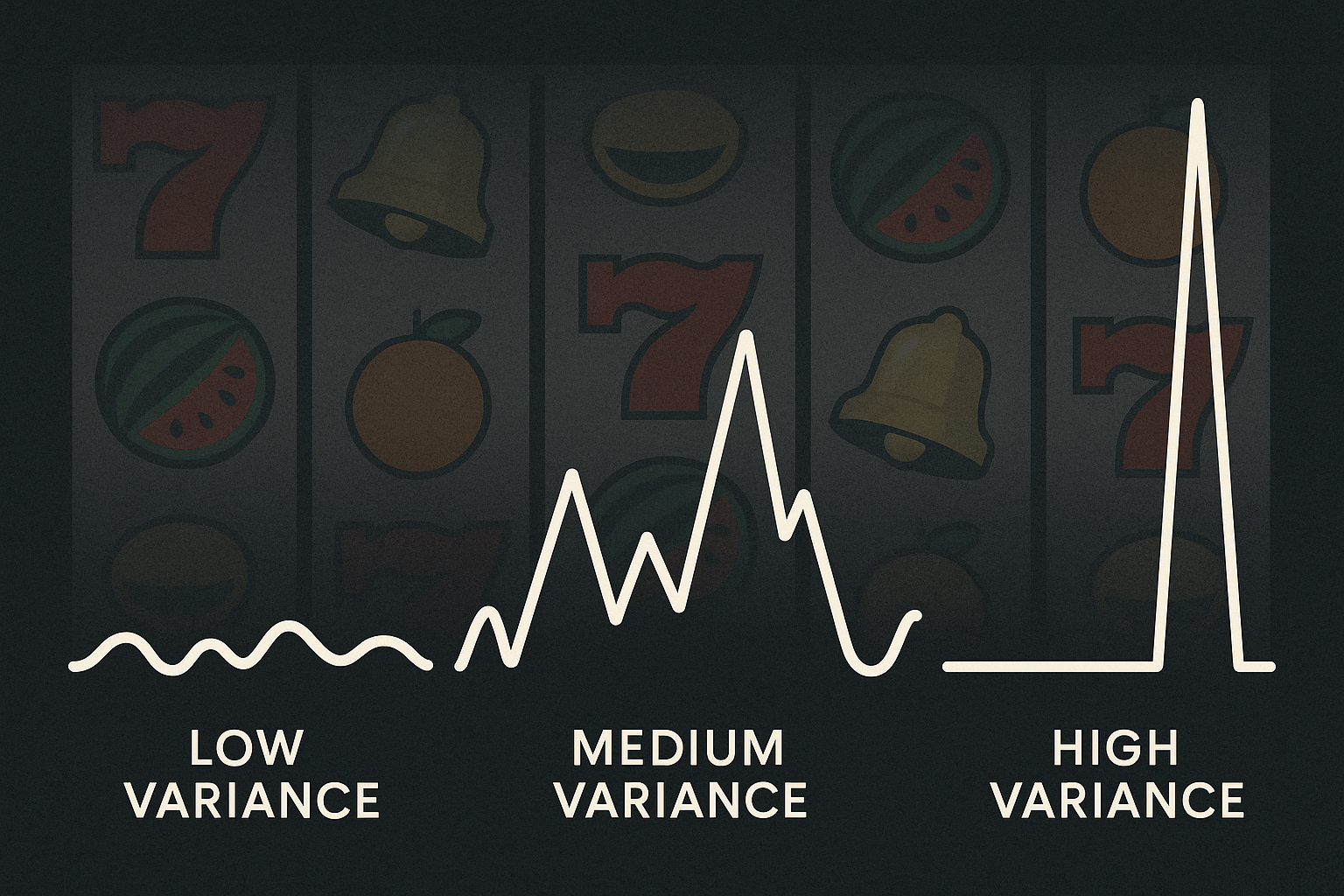
In free spins rounds, many Megaways titles attach an unlimited multiplier trail that climbs by one with every tumble and doesn’t reset until the round ends. That design concentrates a large share of the game’s total return into infrequent bonus rounds, which is a plain-English description of high volatility. Base game sessions on these slots can feel very dry for a long time. If volatility and return figures are new to you, our guide to RTP and volatility covers how the two interact.
Cluster pays slots: grid-based winning
Cluster pays throws out reels-and-lines thinking altogether. Wins form when a group of identical symbols touch each other horizontally or vertically, anywhere on the grid. Diagonal touches usually don’t count, so read the rules screen.
Each game sets a minimum cluster size, commonly five or more matching symbols, with payouts scaling steeply as the cluster grows. Grids are bigger than standard slots to make room for those shapes: Play’n GO’s Reactoonz uses a 7×7 grid, and Push Gaming’s Jammin’ Jars uses 8×8. Cluster games almost always include cascading symbols too, since removing a cluster and refilling the gaps is what creates chain reactions.
Betting is single-stake, like ways-to-win games. There’s nothing to configure beyond the total amount per spin.
Do more paylines mean better odds?
No. This is the most persistent myth in slots. The number of paylines or ways is part of how a game distributes wins, not a measure of how much it returns. A 10-payline slot and a 117,649-way Megaways slot can both run at, say, 96% RTP, which is a 4% house edge either way.
Here’s why. RTP is calculated across the whole game: symbol frequencies on each reel strip, paytable values, feature triggers, and the payline or ways structure all get baked into one figure. When a designer adds ways to win, hits become more frequent, so the paytable values come down to keep the target RTP intact. More coverage, smaller payouts per hit. The math balances.
Two related points worth being precise about:
- Switching off adjustable paylines usually doesn’t change RTP. It scales your bet and your coverage down together. The exception is a game where a jackpot or feature requires max lines or max bet, in which case playing under it does reduce your expected return.
- Every spin is independent. Outcomes come from an RNG, so previous spins, ways counts and near misses tell you nothing about what comes next. There is no configuration that removes the house edge; over enough spins, the house edge is what decides the outcome.
What payline count does affect is how a session feels: more ways generally means more small wins, including plenty that return less than your stake. Fewer lines with fatter payouts means longer dry runs and bigger spikes.
How payout structure affects your betting strategy
None of this is a way to gain an edge. It is about matching your bet size to how a game distributes its payouts so your bankroll lasts as long as you intend it to.
Betting on fixed payline slots
If lines are adjustable, decide first whether the paytable penalizes you for reducing them. If a jackpot or bonus needs all lines active, keep them all on and lower the line bet instead. That is almost always the better trade. Also remember that a paytable multiplier is per line bet, so check the total stake displayed before you spin, not the line figure.
Ways-to-win betting strategy
With 243 or 1,024 ways games you only have one control, so the useful habit is dividing your session budget by your planned number of spins. A $50 budget at $0.50 a spin is roughly 100 spins; at $2.50 it’s 20. Ways-to-win games hit more often than payline equivalents, but many of those hits are partial returns, so a rising “wins” counter isn’t the same as being up.
Megaways bet sizing
Megaways slots are typically high volatility, with a large chunk of their return locked behind free spins. Realistic stake sizing matters more here than anywhere: plan for long stretches with nothing meaningful, and set the stake so you can absorb them at the number of spins you want. Where feature buy options exist, they cost a large multiple of your base stake and give you one bonus round with the same house edge as everything else, so treat that price as the real cost of a single spin. New to the format? Start with our beginner’s guide to slots before you scale stakes up.
Quick comparison of payout structures
| Structure | How wins form | Typical count | Bet control |
|---|---|---|---|
| Paylines | Symbols on set patterns, usually left to right | 1–100 | Lines × bet per line |
| Ways to win | Matching symbols on consecutive reels, any row | 243, 1,024, 7,776 | Single total stake |
| Megaways | Same as ways to win, with random reel heights | 64 to 117,649 per spin | Single total stake |
| Cluster pays | Groups of touching identical symbols on a grid | No fixed count | Single total stake |
FAQ
What is the difference between paylines and ways to win?
Paylines are fixed patterns that symbols must land on. Ways to win count every possible route across consecutive reels, so position within each reel doesn’t matter as long as the run starts on reel 1. Payline games let you bet per line; ways games use a single total stake.
How do Megaways slots work?
Each of the six reels randomly shows 2 to 7 symbols per spin. Multiplying those heights gives that spin’s number of ways, between 64 and 117,649. Winning symbols usually tumble away and are replaced, allowing chained wins from one stake.
Do slots with more paylines pay out more often?
More often, yes, but smaller. Hit frequency rises while individual payouts shrink, and the game’s RTP and house edge stay the same. Frequency and return are two different things.
The short version
Paylines, ways to win, Megaways and cluster pays are four ways of describing which symbol combinations count, and they change how volatile a game feels and how you configure your bet. They do not change the fact that the house edge applies to every spin. Play with money you can afford to lose, set deposit and session limits before you start, and use the operator’s cool-off or self-exclusion tools if play stops being entertainment. Our responsible gambling resources list the support options available.